


Undergraduate & Postgraduate
Inspiring innovators with
a global perspective
0
Student Graduates
0
Students Participated in
Exchange
0
Students Participated
Articulation Programme
0
Countries Represented in
SBMS Students
Undergraduate
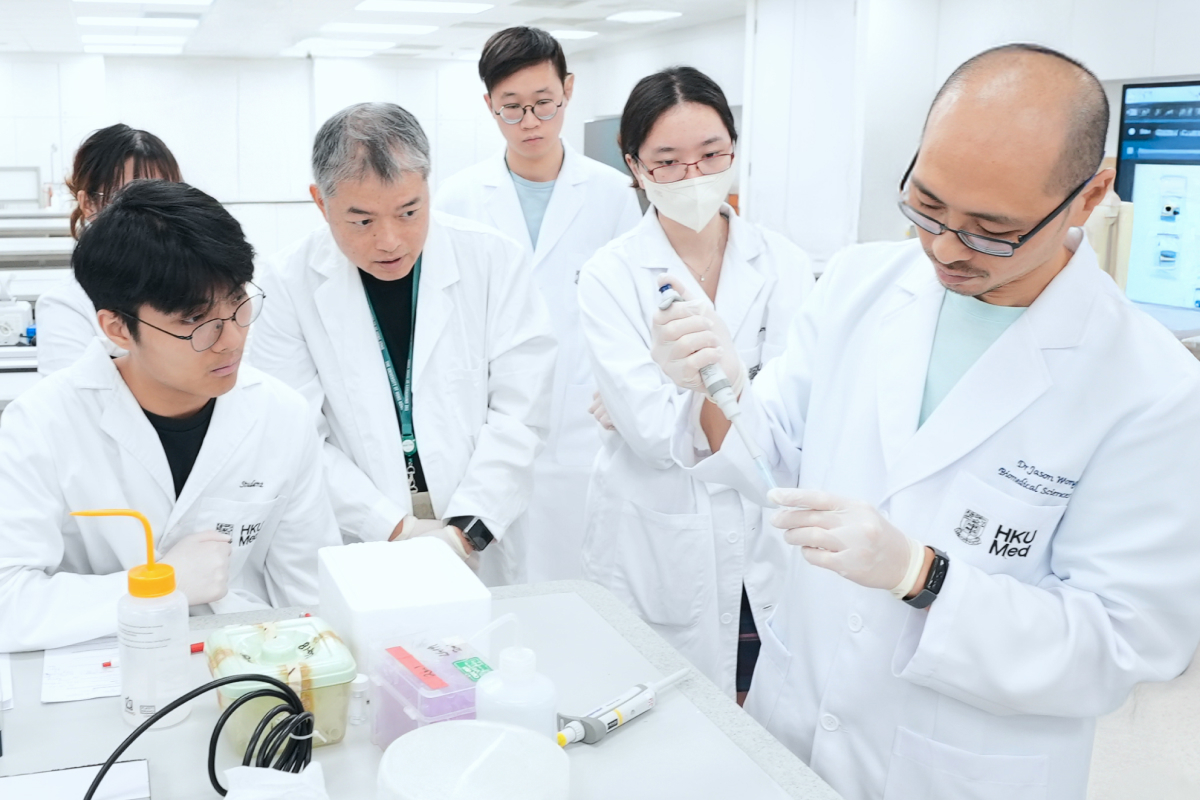
The BBiomedSc programme offers comprehensive experiential learning, including exchanges, internships, field trips, mentorship, and elite research schemes. The programme blends foundational science with emerging technologies, fostering innovation, global perspective, and research readiness for diverse biomedical careers.
Read More
Bachelor of Biomedical Sciences
Major in Biomedical Research
This major covers molecular biology, genetics, bioinformatics, and pharmacology. It focuses on human body structures, life processes, disease principles, diagnostics, and therapeutics.
Major in Bioinformatics
This major trains future leaders in biomedical big data applications such as genomics, precision medicine, AI medical imaging, and digital health.
Major in Clinical Sciences
This major prepares future healthcare professionals for careers in clinical research, medicine, and laboratory work. It provides a strong foundation in clinical sciences and essential skills for various healthcare settings.
Major in Health Technology
This major prepares biomedical scientists to lead in innovative biomedical technology. Graduates gain skills in synthetic biology, protein/RNA design and engineering, next-generation biomaterials, digital health, and precision medicine.
Minor Options
Students can plan their studies to acquire the remaining 90 credits by various combinations. They may take a minor and/or electives offered within the BBiomedSc curriculum or from other curricula.
Curriculum Structure
The BBiomedSc curriculum is designed with a good balance of structure and flexibility, allowing students to plan their studies according to their interests. Students are required to complete a total of 240 credits of courses in the four-year curriculum:
- Biomedical Sciences major courses: 96 credits
- Common Core courses: 36 credits
- Language Enhancement courses: 12 credits
- Artificial Intelligence Literacy courses: 6 credits
- Electives, Minors, and/or Second Major: 90 credits
The Final Year Project and the Innovation Team Project are available as Capstone Experiences for students in their last year of study. The former allows students to integrate their knowledge and apply experimental and informatics skills to solve defined problems through research. The latter stimulates students to evaluate biomedical research output for translation into viable products to the intricacies of setting up a company. For Major-Specific Curriculum, please visit: https://biomedsc.hku.hk/incoming-students
Articulation & Intercalated Programmes
There are three possible articulation pathways after the BBiomedSc (4 years): Bachelor of Veterinary Medicine & Surgery (BVM&S), Master of Diagnostic Radiography (MDR), and Bachelor of Medicine and Bachelor of Surgery (MBBS).
For details, please visit: https://biomedsc.hku.hk/incoming-students
Internship Opportunities
Biomedical Sciences students can enhance their academic journey with non-credit-bearing summer internships or a credit-bearing internship course in year 3, where they will gain hands-on research experience alongside research and industry leaders. Additionally, there are guaranteed paid summer internships to work in research or industry, allowing students to expand their networks and gain valuable insights into the latest developments in biomedical sciences.
Summer Internship
A comprehensive non-credit bearing experiential learning component in our Biomedical Sciences curriculum is open to all students in their first three years of studies. Students are expected to take on an 8-week internship work during the summer semester. Three types of subsidised summer internships will be provided to students, namely:
- Local Research Internship
- Overseas Research Internship
- Industrial Internship
For more information, please visit Research & Summer Internship.
Undergraduate Research Fellowship Programme (URFP)
A prestigious programme aimed to enhance students’ learning experience and to nurture the next generation of researchers and scholars. It offers opportunities for academically outstanding undergraduate students to undertake research under the guidance and supervision of academics with a strong research track record and experience in training research postgraduate students.
Read on at Undergraduate Research Fellowship Programme (URFP).
Career Prospects
Biomedical
Research Graduates in this major will be equipped with practical and transferable skills applicable to a wide range of areas in both the public and private sectors. They are highly employable in research in university and government laboratories, medical development, and management for the pharmaceutical, diagnostics, and medical equipment industries, as well as hospital and healthcare planning.
Bioinformatics
Graduates in this major will specifically possess practical and transferable interdisciplinary skills highly applicable and widely used in research and development, hospitals and the healthcare industry and beyond, both locally and internationally, which meet the growing demand for biotechnology and big data expertise in local and international research centres, as well as growing demand for the clinical and public health data analysis in the hospital and healthcare sector.
Clinical Sciences
Graduates in this major will be highly sought after in various sectors, including clinical research, healthcare management, and public health roles in government or NGOs. They'll have opportunities to work in clinical labs, diagnostic imaging centres, and more. Their expertise will be highly valued by pharmaceutical companies, research institutions, and healthcare organisations, where they can contribute to developing new medical therapies and advancing clinical practice. In the fast-growing biotechnology, digital health, and medical technology industries in Hong Kong and globally, these graduates will play a crucial role in shaping the future of healthcare innovation. They will also be equipped with essential knowledge and skills to pursue further postgraduate studies in clinical and healthcare-related professions.
Healthcare Technology
Graduates in this major will be in strong demand in the growing biotechnology, digital health, and medical technology industries in Hong Kong and across the globe. The graduates will be well-equipped with the knowledge, skills, and experience necessary to pursue a career in the private sector in established or start-up companies in the pharmaceutical, cellular therapeutics, medical devices, telemedicine, digital health, and clinical regulatory affairs.
Admissions
Our Bachelor of Biomedical Sciences (BBiomedSc) programme develops well-rounded graduates excelling in various professional fields and advanced academic pursuits. The curriculum delves into key biomedical disciplines, equipping students with skills needed for significant roles in research, industry development, and healthcare management.
For details, please visit https://biomedsc.hku.hk/prospective-students
Contact
Taught Postgraduate
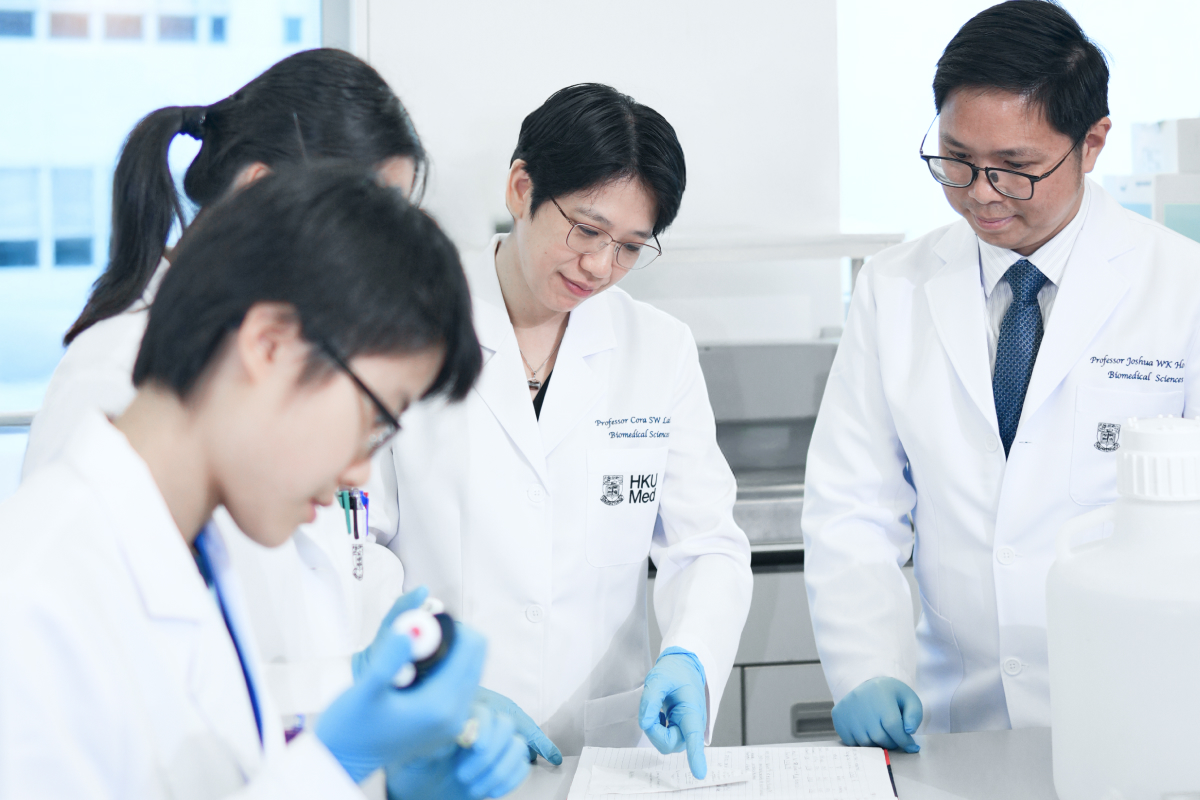
The MBioInno programme offers graduates diverse career opportunities in biotechnology, digital health, AI, and healthcare sectors. It features internships, entrepreneurship immersion, and industry collaborations, providing practical experience. Graduates are equipped with transferable skills for roles in research, industry, government, and startups, fostering innovation in biomedical sciences and healthcare.
Read More
Master of Biomedical Innovation
Research Postgraduate
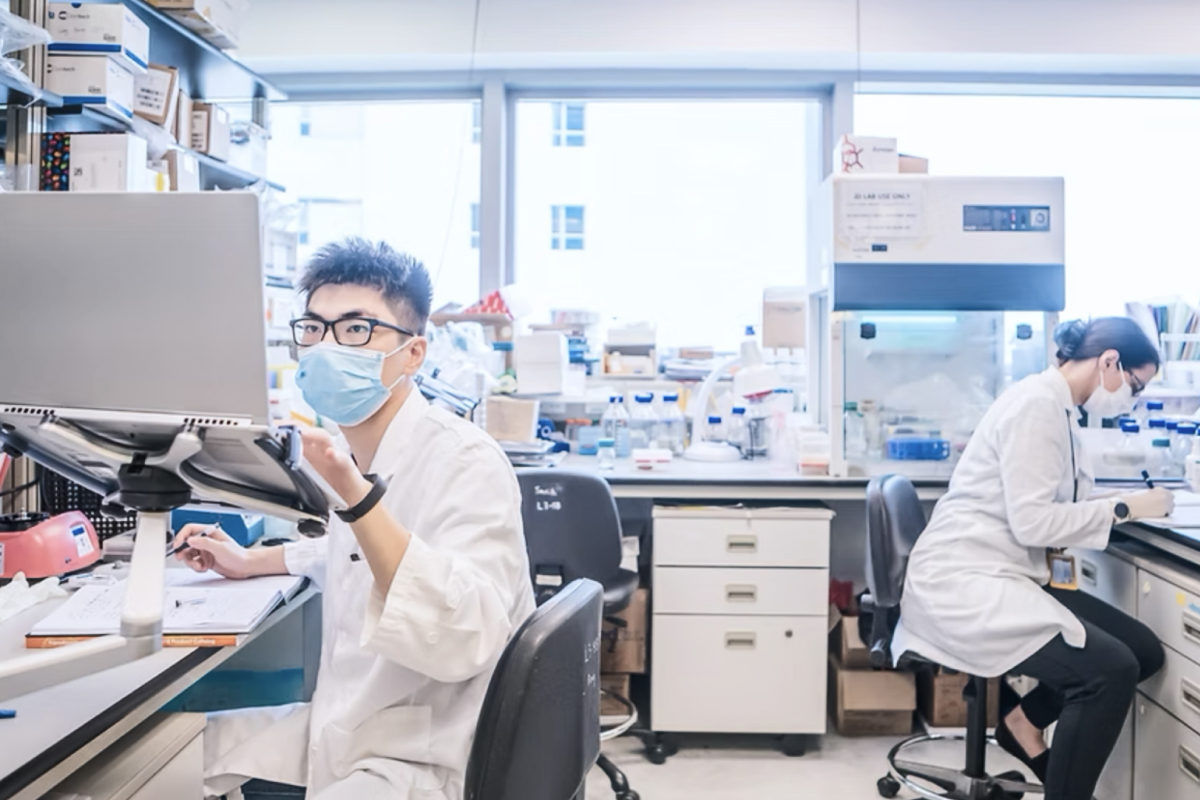
The School of Biomedical Sciences offers MPhil and PhD research degrees with excellent infrastructure, training, and international engagement. Financial support includes scholarships like HKPF and PGS, covering stipends, tuition fee waivers, and conference grants. The programme emphasises research, communication, and critical thinking for careers in academia, biotechnology, and pharmaceutical industries.
Read More
Master of Philosophy
Study Period
24 months (FT); 36 months (PT)
Qualification Requirement
- Bachelor 2A or above, OR
- Bachelor 2B + taught Master’s degree (2A or above)
Doctor of Philosophy
3-year PhD
Study Period
36 months (FT); 54 months (PT)
4-year PhD
Study Period
48 months (FT); 72 months (PT)
Qualification Requirement
- Bachelor 2A Hons + MPhil, OR
- Bachelor 2B Hons + MPhil (Outstanding or Excellent)
Qualification Requirement
- Bachelor H1 OR
- Bachelor 2A + taught Master 2A OR
- Bachelor 2B + taught Master with Distinction
Admissions
The Graduate School is responsible for the admission of research postgraduates. Prospective postgraduate students should apply online to the Graduate School.
For information regarding admission, degree regulations, and online application:
Please check our Research Prospectus 2026-2027 for more details about our supervisors and research expertise:
Enquiries
Please refer to the FAQs section on Graduate School homepage for answers to commonly asked questions regarding research postgraduate studies application.
For general inquiries, please contact the Research Support Team:
- Tel: (852) 3917 6912
- Email: sbmsrpg@hku.hk
Programmes and Courses in Collaboration
BSc – Major in Biochemistry
Introduction
Biochemistry, strengthened with molecular biology, is a field with enormous applications to our daily lives. It is also a discipline of sublime fascination. Our understanding of the molecular basis of various life processes has greatly improved human welfare, particularly in the medical and nutritional aspects. Further advances in this rapidly expanding field of knowledge, including building and establishing new conceptual frameworks, development of novel methodologies and techniques, should pave way to even more spectacular insights into nature and a better control of our destiny.
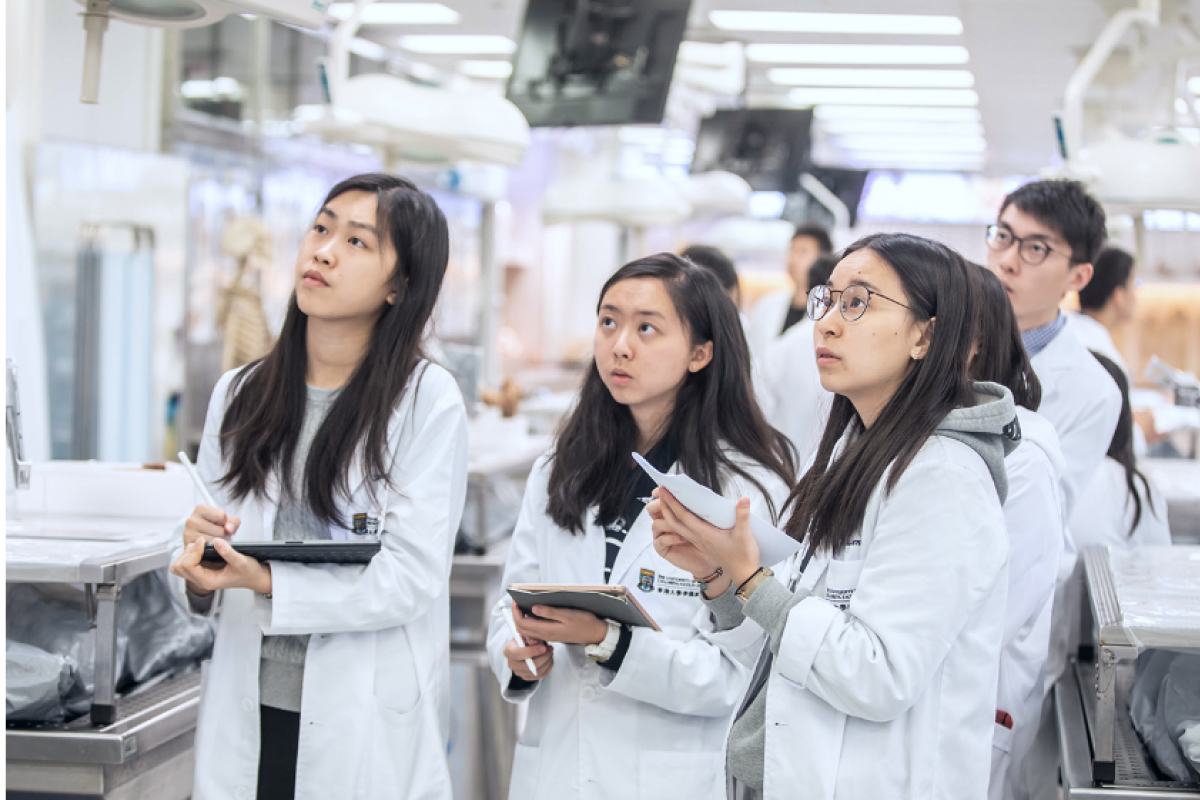
The Major in Biochemistry offered by the School of Biomedical Sciences is designed to provide students with both basic and advanced knowledge in modern biochemistry and molecular biology. Our goal is to develop and equip students with enough critical thinking and analytical skills so that they can embark on a career in biochemical sciences.
Career Prospects
In recent years, over half of our Biochemistry graduates have entered the commercial world and become business professionals, while approximately a third have found employment in occupations related to science, biotechnology and healthcare. Some of our graduates are employed in the education sector, or have become scientific personnel in hospitals and tertiary institutions. A small group of graduates have joined the Civil Services. Each year, a significant number of students (around 30%) take up postgraduate studies and pursue a career in advanced scientific and medical research.
We have been studying the career trends of Biochemistry graduates over the past few years in order to design courses tailoring to the needs of our graduates. Therefore, some courses have stronger elements of applied medical and health sciences, some have broader coverage on biotechnology, protein and genetic engineering, while others focus on current research advances to prepare students for future scientific research careers.
Admission to Biochemistry Major
Admission to Biochemistry Major
The Major in Biochemistry is offered through the Bachelor of Science programme (JUPAS programme code 6901) in the Faculty of Science. Students can declare a major in Biochemistry after they are admitted to the 6901 BSc programme.
Minimum Admission Requirements for 6901 Bachelor of Science
JUPAS Applicants (for those who are applying on the strength of HKDSE results)
- Level 3 in Chinese Language
- Level 3 in English Language
- Level 2 in Mathematics
- Level 2 in Liberal Studies
- Level 3 in two subjects, with at least one elective subject in Biology,
Chemistry, Physics, Combined Science or Integrated Science
Non-JUPAS Applicants
Other students who are not applying on the strength of HKDSE such as Associate Degree, Higher Diploma, GCE, IB, SAT, students under Early Admissions Scheme or students from mainland or overseas will be considered individually.
For equiries on admission, application procedures, and entrance requirements, please consult the admission requirement and application page on Faculty of Science.
Graduation Requirements
Students must satisfy the graduation requirements as specified by the Faculty of Science for the the award of a BSc degree
Required courses for Major in Biochemistry:
- 4-year curriculum
Course List
Courses offered by the School of Biomedical Sciences to BSc Major in Biochemistry Curriculum
Perspectives in biochemistry. The objectives of this course are (i) to teach students a biochemical perspective on each of the Basic Sciences focusing on concepts fundamental to the learning of Biochemistry; (ii) to promote deep learning of course material through an integrated programme of practical and collaborative tasks; (iii) to Inspire students with a view of the great discoveries and future challenges for Biochemistry; and (iv) to help students make the transition from school to university by developing their teamwork, independent study skills and confidence to communicate within a Biochemistry learning environment.
Basic Biochemistry. This course is designed to present an overview of biochemistry of fundamental importance to the life process. We aim to develop appreciation of the basics in biochemistry as a common ground for science and non-science students to progress into their areas of specialization. Students intending to pursue further studies in Biochemistry and Molecular Biology will find this course particularly helpful.
Principles of Molecular Biology. This course is designed to provide students with an in-depth understanding of the central dogma of molecular biology, including DNA replication, RNA transcription, and protein translation. Additionally, it addresses the regulation of gene expression in both prokaryotic and eukaryotic organisms. Students will investigate the structure and function of nucleic acids and proteins, develop competencies in interpreting molecular biology data, and gain proficiency in essential laboratory techniques, including polymerase chain reaction (PCR), DNA sequencing, cloning, and transgenic technology.
Basic Metabolism. This course aims to provide foundation concepts of metabolism. It will enable students of this course to see how some of the basic concepts in biochemistry (specifically those learned in BIOC1600 and BIOC2600) could be applied to explain one of the most important and cardinal issues of biological life: the acquisition of metabolic energy. The course will lay the foundation for the more advanced courses offered in the Biochemistry Major and will also serve as a useful complement to courses on nutrition.
Essential Techniques in Biochemistry and Molecular Biology. To give students a general overview of different experimental approaches and model systems, and to provide students with hands-on experience in basic biochemical and molecular techniques.
Sequence Bioinformatics. This course will examine existing bioinformatics tools for DNA and protein sequence analysis. The underlying principles of these analysis programs and services will be presented. Students will learn how to retrieve, analyse, and compare protein and DNA sequences using bioinformatics tools available on the World Wide Web.
Molecular Medicine. To provide up-to-date knowledge of the molecular and genetic basis of human diseases including cancer, thereby preparing the students for a career in medical molecular biology, biotechnological, pharmaceutical and genome research.
Directed Studies in Biochemistry. To enhance students knowledge of a particular topic and the students self-directed learning and critical thinking skills.
Download course registration form.
Biochemistry Internship. This course aims to offer students the opportunities to gain work experience in the industry related to their major of study. The workplace learning experience would be of great benefit to the students to apply their knowledge gained in the study to the real work environments. Students have to take on at least 160 hours of internship work either within the University or outside the University arranged by the School/Departments.
Download internship application form.
Advanced Biochemistry. This course aims at providing students an in-depth understanding of fundamental principles applicable in modern biochemistry. This course is particularly useful for students interested in research or intending to develop a career in biomedical sciences.
Molecular Biology of the Gene. To provide an up-to-date knowledge of molecular biology, especially with respect to the regulation of eukaryotic gene expression, molecular embryology.
This is a comprehensive course covering many detailed molecular aspects of gene regulation and gene function. Through this course an understanding of how gene expression can be regulated at levels of transcription and post transcription will be gained.
Advanced Techniques in Biochemistry and Molecular Biology. This is an advanced experimental-based course for students majoring in Biochemistry and related disciplines. The aim is to provide the necessary training for students to pursuit postgraduate research education and potential employment in a scientific laboratory/industry environment.
Biochemistry Project. To enable students to acquire the basic skills in scientific research: literature search, critical reasoning, communication (both orally and in writing), teamwork and time management. The course is particularly useful for those students who intend to pursue a career in life science.
Download course registration form.
Course Advising
Please contact one of our course selection advisers below if you need help on course selection and course approval or if you want to know more about our BSc Biochemistry major:
- Dr. HO, Joanna Wen Ying
- Office: L4-54, Laboratory Block, 21 Sassoon Road, Hong Kong
- Tel: 3917-9495
- Email: joannaho@hku.hk
- Dr. KWAN, Rachel Hiu Lam
- Office: L4-55, Laboratory Block, 21 Sassoon Road, Hong Kong
- Tel: 3917-9477
- Email: rkwanhl@hku.hk
- Dr. YUEN, Bonny Bun Ho
- Office: L4-54, Laboratory Block, 21 Sassoon Road, Hong Kong
- Tel: 3917-9500
- Email: yuenbbh@hku.hk
Internships
Undergraduate Internships
- Should you need further information, you may contact Ms Pinky Chow (tkpchow@hku.hk) or Ms Hailey Lin (hhhailey@hku.hk) or Dr. Bonny Yuen (yuenbbh@hku.hk) .
- Prior approval by the internship Course Coordinator must be obtained before commencement of the internship, and no post-application is allowed.
- Please note that student should have passed at least 24 credits advanced courses (codes starting with 3 or above) in their primary major curriculum before the commencement of the internship. Please attach a copy of your transcript when you submit the internship application form.
- Latest: 1) Guidelines on internship for BSc students and 2) Application form are available here.
Important dates for submission of application (2025/26):
Student Projects
Undergraduate Projects
Undergraduate research is an important component in our BSc degree programme. The Biochemistry Project (BIOC4999) provides an opportunity for students to participate in research. Students will learn how to formulate scientific questions, how to apply their knowledge for scientific enquiry, and to develop their critical thinking skills. Students can also get hands-on experience with state-of-the-art research facilities and experimental techniques.
The Biochemistry Project (BIOC4999) is especially recommended for those who are interested in pursuing a research higher degree.
Students who plan to register for BIOC4999 should discuss with staff members whose research projects are of interest to them. Students must have obtained approval from their intended supervisors before they can register for BIOC4999. Please submit application form before course registration.
Click here for the list of briefing PPTs & Biochemistry Projects (HKU only). Students can also contact individual teachers for more information.
Master of Medical Sciences
Course List
For Faculty of Medicine
Bachelor of Medicine and Bachelor of Surgery:
The School is responsible for the teaching of biomedical sciences to first to fourth year medical students in the MBBS programme. The teaching, accomplished through lectures, tutorials and practical sessions, forms part of the integrated system-based MBBS curriculum. In addition, our teachers serve as case writers and tutors for problem-based learning, contribute to the teaching of medical humanities, as well as supervise students in research-attachment modules during the elective semester.
Bachelor of Pharmacy:
BPHM1111 Integrated Course in Basic Sciences: Anatomy, Physiology & Biochemistry
Bachelor of Nursing:
BMSN1601 Foundation of Life Sciences
BMSN2603 Life Sciences I
BMSN2604 Life Sciences II
BMSN3605 Life Sciences III
Bachelor of Chinese Medicine:
BMSC1101 Life Sciences I
BMSC2102 Life Sciences II
BMSC2203 Life Sciences III
BMSC3104 Life sciences IV
Bachelor of Biomedical Sciences:
BBMS1001 Introduction to Human Anatomy and Physiology
BBMS2001 Basic Biomedical Laboratory Techniques
BBMS2003 Human Genetics
BBMS2004 Human Anatomy
BBMS2005 Biomedical Pharmacology
BBMS2006 Physiological Basis of Health and Disease
BBMS2007 Essential Molecular Biology
BBMS2008 Contemporary Topics in Biomedical Technology
BBMS3002 Molecular Biology of the Cell
BBMS3003 Mechanisms and Pathology of Diseases
BBMS3004 Molecular Diagnostics Laboratory
BBMS3005 Infection and Immunity
BBMS3007 Cancer Genetics
BBMS3008 Essential Proteomics
BBMS3010 Emerging Infections
BBMS3011 Molecular Neuroscience
BBMS3012 Stem Cell Biotechnologies in Regenerative Medicine
BBMS3018 Biomechanics and Biomedical Technologies
BBMS4001 Biomedical Sciences Final Year Project
BBMS4003 Developmental Genetics
BBMS4011 Biomedical Innovation Team Project
BIOC1600 Perspectives in Biochemistry
BIOC2600 Basic Biochemistry
BIOC3605 Sequence Bioinformatics
BIOC4612 Molecular Biology of the Gene
BSc(Bioinformatics):
BBMS2003 Human Genetics
BBMS2007 Essential Molecular Biology
BBMS3008 Essential Proteomics
BIOC1600 Perspectives in Biochemistry
BIOC2600 Basic Biochemistry
BIOC3605 Sequence Bioinformatics
BIOF1001 Introduction to Biomedical Data Science
BIOF2001 Artificial Intelligence in Medicine
BIOF2013 Biomedical Statistics
BIOF2014 Statistical Modelling in Bioinformatics
BIOF3001 Big Data Biomedical Informatics
BIOF3002 Genome Sequencing and Analysis
BIOF3003 Digital Health
BIOF3004 Bioinformatics Internship
BIOF3005 Structural Bioinformatics
BIOF3006 Biomedical Software Systems
BIOF3007 Clinical Bioinformatics
BIOF4001 Final Year Project
BIOF4002 Global Health Informatics
BIOF4003 Biomedical Image Informatics
For Faculty of Science
Bachelor of Science - Major in Biochemistry:
BIOC1600 Perspectives in Biochemistry
BIOC2600 Basic Biochemistry
BIOC3601 Basic Metabolism
BIOC3604 Essential Techniques in Biochemistry and Molecular Biology
BIOC3605 Sequence Bioinformatics
BIOC3606 Molecular Medicine
BIOC3999 Directed Studies in Biochemistry
BIOC4610 Advanced Biochemistry
BIOC4612 Molecular Biology of the Gene
BIOC4613 Advanced Techniques in Biochemistry and Molecular Biology
BIOC4966 Biochemistry Internship
BIOC4999 Biochemistry Project
BIOL3404 Protein Structure and Function
For Faculty of Dentistry
Bachelor of Dental Surgery:
The School contributes to the theme-based sessions and PBL tutorials for first year dental students.
For Faculty of Engineering
Bachelor of Engineering (Major in Medical Engineering):
BMED1207 Foundations of Biochemistry for Medical Engineering
BMED2301 Life Sciences I (Biochemistry)
BMED2302 Life Sciences II (Cell Biology & Physiology)
BMED3301 Life Sciences III (Physiology)
For University Common Core Curriculum
CCST9006 Chasing Biomedical Miracles: Promises and Perils
CCST9009 Living with Stem Cells
CCST9082 Pandemics: From Science to Social Impact
Scholarships
Michael Wang
PhD at Imperial College London
BBiomedSc Class of 2022
I especially enjoy collaborating with researchers and technicians in other parts of the UK, China and Thailand, whom, because of their different research backgrounds, often gave me fresh perspectives on how to further develop my studies...
Sabrina Chan
Biology teacher at Defining Education
BBiomedSc Class of 2020
Looking back, I am truly grateful for how the BBMS program helped shaped me into the teacher I am today. I often tell my students that my four years at university were some of the most fruitful years of my life.
Claudia Lee
Doctor in Queen Mary Hospital
BBiomedSc Class of 2021
I feel privileged to have transitioned from being a BBMS graduate to an MBBS student through the articulation track. Reflecting on the past 4 years of studies, it has been a journey filled with challenges, hard work, and emotions.
Join us and start your journey in biomedical sciences! Your ambitions are fully supported by HKU’s scholarship opportunities.
At the School of Biomedical Sciences, we are committed to supporting our students in achieving their academic and professional goals through a range of scholarship opportunities. For prospective undergraduate students, HKU offers various scholarships designed to assist you in your educational journey. These awards are tailored to meet diverse needs and are an excellent way to plan your application; more details can be found here: https://aas.hku.hk/scholarship-opportunities/.
For those pursuing taught master’s degrees, we provide scholarships and prizes that recognize academic excellence and potential. Selection criteria include prior academic performance, relevant work experience, and demonstrated capacity for innovation in the biomedical field. The value of these scholarships is periodically reviewed by the university, and detailed application procedures and eligibility criteria will be announced soon to help you prepare your application.
Research postgraduate students, including MPhil and PhD candidates, can benefit from the Postgraduate Scholarship, which offers financial support for their research endeavors. Additionally, conference grants are available to enable students to participate in scientific meetings worldwide, presenting their research and engaging with the global scientific community. For comprehensive information on these opportunities and other forms of financial assistance, please refer to the Faculty of Medicine Research Postgraduate Prospectus. We are dedicated to fostering your success and look forward to supporting your academic journey in biomedical sciences.
