YS Chan

BSc, PhD (HKU); CBiol, FRSB

Senior Advisor to the Director of Biomedical Sciences

Senior Advisor to the Dean of Medicine

Director (Development and Infrastructure), Li Ka Shing Faculty of Medicine

Co-Convenor, Strategic Research Theme on Neuroscience

test

Contact

L4-64, Laboratory Block

21 Sassoon Road, Hong Kong


T +852 3917 9163

F +852 2855 9730

yschan@hku.hk

Research Interests

Neural plasticity: Circuitry development & rewiring after injury

Biography

Professor Ying-Shing Chan graduated from The University of Hong Kong (HKU) and received his postdoctoral training at the Institute of Human Physiology at Pisa, Italy, and The Rockefeller University, USA.  He is Senior Advisor to the Dean of Medicine (HKU), Senior Advisor to the Director of Biomedical Sciences (HKU) and was appointed the Dexter H C Man Family Professor in Medical Science of HKU in 2014.   He also served as the Associate Dean (Research), Associate Dean (Academic Networking and Student Affairs), Associate Dean (Development and Infrastructure), Head of Department of Physiology, Deputy Director of the School of Biomedical Sciences, Co-Convenor of the HKU Strategic Research Theme on Neuroscience, and Director of HKU Neuroscience Research Center.  Professor Chan is an elected Fellow of the Royal Society of Biology.  He is the recipient of the First Medallion of the Australian Neuroscience Society.  He has been invited by the Nobel Committee to nominate candidate(s) for the Nobel Prize in Physiology or Medicine.   He also received the HKU Outstanding Researcher Award.  He has a long record of commitment to education and was awarded the HKU Outstanding Research Student Supervisor Award and Medical Faculty Teaching Medal. 

Professor Chan served as Co-Chair of the International Scientific Program Committee of the 39th Congress of International Union of Physiological Sciences (IUPS), Chair of International Brain Research Organization (IBRO) Asian/Pacific Regional Committee, President of Federation of Asian-Oceania Neuroscience Societies (FAONS), President of the Asian Pacific Society for Neurochemistry (APSN), Vice-President of The Chinese Association for Physiological Sciences, Standing Executive Committee Member of the Chinese Neuroscience Society, President of Hong Kong Society of Neurosciences, and Secretary-General of the Hong Kong Brain Foundation.  He is currently Vice-Chair of the Universitas 21 Health Sciences Group, Chair of the IUPS Commission on Neurobiology, and IUPS Council Member.

Professor Chan served as a panel member (Biology & Medicine) of the Research Grants Council of Hong Kong and the RAE Exercise (Health Sciences) conducted by the University Grants Committee of Hong Kong.  He is currently Grant Review Board member of the Health and Medical Research Fund of HKSAR.  

Professor Chan is the Founding Editor-in-Chief for IBRO Neuroscience Reports and Associate Editor for European Journal of Neuroscience.  Professor Chan’s research interests include synaptic mechanisms underlying plastic modification of neural networks for spatial learning as well as the exploitation of human bone marrow stromal cell-derived glial cells and neurons in the re-assembly of functional neural circuits in neurodegenerative diseases.

Research Description

Neural plasticity: Circuitry development & rewiring after injury
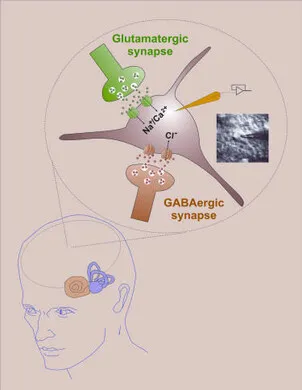
Professor Chan’s research goal is to probe mechanisms that allow plastic modification of neural networks for spatial cognition. His team revealed a postnatal period critical to the assembly of brainstem circuits responsible for spatial navigation. Fine-tuning of these circuits require participation of parvalbumin neurons as revealed by pharmacological, viral tracing and chemo-/ optogenetic approaches. Excitatory-inhibitory balance in these circuits tunes synaptic plasticity that effects behavioral outcomes. Our finding that neuromodulators (such as endocannabinoid, serotonin, cholecystokinin) induce or reset experience-dependent synaptic plasticity highlights the impact of such agents on the acquisition of spatial learning. Professor Chan’s team provided insights into signaling pathways that enhance derivation of myelinating glia and neurons from human bone marrow stromal cells. Findings hold promise for facilitating the re-assembly of functional neuronal networks after neural trauma and in neurodegenerative diseases.

011

Selected Publications

  1. Hu X.Q., Wu K.L., Rong K.L., Ke Y., Yung W.H., Shum D.K., Chan Y.S. (2025) Harnessing a non-canonical vestibular input to head-direction network rectifies age-related navigational deficitsNature Aging 5: 1079-1096.  DOI: 10.1038/s43587-025-00884-4.
  2. Shi W., Wu K.L., Yang M., Botelho F.P., Chua O.W., Hu H.J., Ng K.P., Lam U.T., Tam K.W., Ma C.W., Shum D.K., Chan Y.S. (2025) Cannabinoid overrides differential triggers of GABAergic plasticity in vestibular circuits and distorts the development of navigation.  iScience 28: 112566.  DOI: 10.1016/j.isci.2025.112566.
  3. Jiang Q.F., Wu K.L., Hu X.Q., Cheung M.H., Chen W.Q., Ma C.W., Shum D.K., Chan Y.S.  (2024)  Neonatal GABAergic transmission primes vestibular gating of output for adult spatial navigation. Cellular and Molecular Life Sciences 81: 147.  DOI: 10.1007/s00018-024-05170-x.
  4. Tam K.W., Wong C.Y., Wu K.L., Lam G., Liang X., Wong W.T., Li M.T., Liu W.Y., Cai S., Shea G.K., Shum D.K., Chan Y.S. (2023) IPSC-derived sensory neurons directing fate commitment of human BMSC-derived Schwann cells: applications in traumatic neural injuries. Cells 12: 1479.  DOI: 10.3390/cells12111479.
  5. Zhang C., Wang H., Cheung M.C., Chan Y.S., Shea G.K. (2023) Revealing the developmental origin and lineage predilection of neural progenitors within human bone marrow via single-cell analysis: implications for regenerative medicine.  Genome Medicine 15: 66.  DOI: 10.1186/s13073-023-01224-0.
  6. Liu J.A., Tam K.W., Chen Y.L., Feng X., Chan W.L., Lo A.L., Wu K.L., Hui M.N., Wu M.H., Chan K.K., Cheung M.P., Cheung C.W., Shum D.K., Chan Y.S., Cheung M. (2023) Transplanting human neural stem cells with ~50% reduction of SOX9 gene dosage promotes tissue repair and functional recovery from severe spinal cord injury.   Advanced Science 10: e2205804. DOI: 10.1002/advs.202205804.
  7. Lai S.K., Wu K.L., Ma C.W., Ng K.P., Hu X., Tam K.W., Yung W.H., Wang Y.T., Wong T.P., Shum D.K., Chan Y.S. (2023) Timely insertion of APMA receptor in vestibular circuit is required for the manifestation of righting reflexes and navigational performance. Progress in Neurobiology 221: 102402.  DOI: 10.1016/j.pneurobio.2023.102402.
  8. Han L., Wu K.L., Kwan P.Y., Chua O.W., Shum D.K., Chan Y.S. (2021) 5-HT1A receptor-mediated attenuation of synaptic transmission in rat medial vestibular nucleus impacts on vestibular-related motor function.  Journal of Physiology 599: 253-267. DOI: 10.1113/JP280610.
  9. Zhang A.J., Lee A.C., Chu H., Chan J.F., Fan Z., Li C., Liu F., Chen Y., Yuan S., Poon V.K., Chan C.C., Cai J.P., Wu K.L., Sridhar S., Chan Y.S., Yuen K.Y. (2021) SARS-CoV-2 infects and damages the mature and immature olfactory sensory neurons of hamsters.  Clinical Infectious Disease 73: e503-e512.  DOI: 10.1093/cid/ciaa995.
  10. Tsui Y.P., Lam G., Wu K.L., Li M.T., Tam K.W., Shum D.K., Chan Y.S. (2021) Derivation of oligodendrocyte precursors from adult bone marrow stromal cells for remyelination therapy.  Cells 10: 2166.  DOI: 10.3390/cells10082166.
  11. Ma C.W., Kwan P.Y., Wu K.L., Shum D.K., Chan Y.S. (2019) Regulatory roles of perineuronal nets and semaphorin 3A in the postnatal maturation of the central vestibular circuitry for graviceptive reflex.  Brain Structure and Function 224: 613-626. DOI: 10.1007/s00429-018-1795-x
  12. Li Y.H., Han L., Wu K.L., Chan Y.S. (2017) Activation of 5-HT7 receptors reverses NMDA receptor-dependent LTD by activating PKA at medial vestibular neurons.  Neuropharmacology 123: 242-248.  DOI: 10.1016/j.neuropharm.2017.05.005.
  13. Cai S., Tsui Y.P., Tam K.W., Shea G.K., Chang R.S., Ao Q., Shum D.K., Chan Y.S. (2017) Directed differentiation of human bone marrow stromal cells to fate-committed Schwann cells.  Stem Cell Reports 9: 1097-1108.  DOI: 10.1016/j.stemcr.2017.08.004.
  14. Ma C.W., Zhang F.X., Lai C.H., Lai S.K., Yung K.K., Shum D.K., Chan Y.S. (2013) Postnatal expression of TrkB receptors in rat vestibular nuclear neurons responsive to horizontal and vertical linear acceleration.  Journal of Comparative Neurology 521: 612-625.   DOI: 10.1002/cne.23193.
  15. Ao Q., Fung C.K., Tsui A.Y., Cai S., Zuo H.C., Chan Y.S., Shum D.K. (2011) The regeneration of transected sciatic nerves of adult rats using chitosan nerve conduits seeded with bone marrow stromal cell-derived Schwann cells. Biomaterials 32: 787-796. DOI: 10.1016/j.biomaterials.2010.09.046.

External Grants

HMRF projects:

  • Surface hyaluronidase-4 derivatized oligodendrocyte precursor cells for repairing inflammation-induced impairment in the CNS

  • Cell-based therapy for congenital myelin disorders of CNS

  • Overcoming hurdles in bridging critical nerve gaps to improve post-traumatic nerve regeneration and rehabilitation

  • Towards cellular therapy with human bone marrow stromal cell-derived motor neurons in a mouse model of amyotrophic lateral sclerosis
  • Fluoxetine-induced plasticity for improvement of spatial cognition deficits after neonatal cannabinoid exposure
  • Surface hyaluronidase-4 derivatized oligodendrocyte precursor cells for repairing inflammation-induced impairment in the CNS

  • Cell-based therapy for congenital myelin disorders of CNS

  • Overcoming hurdles in bridging critical nerve gaps to improve post-traumatic nerve regeneration and rehabilitation

  • Towards cellular therapy with human bone marrow stromal cell-derived motor neurons in a mouse model of amyotrophic lateral sclerosis
  • 
Fluoxetine-induced plasticity for improvement of spatial cognition deficits after neonatal cannabinoid exposure 

GRF projects:

  • 
Selective recruitment of inhibitory interneurons to vestibular microcircuits for distinct behavior

  • Integration of new neurons into the mature vestibular circuitry requires GABAergic signaling for relevant outcome in behavior

  • Serotonin-induced bidirectional modulation of activity-dependent synaptic plasticity tunes vestibular functions

  • Long-term depression of inhibitory responses is critical to the maturation of the vestibular circuitry

  • Vestibular nuclear signals regulate the postnatal development of a thalamic network for spatial navigation

  • Brain-derived neurotrophic factor regulates plasticity in the vestibular system

NSFC/RGC project:


  • Orexin-induced modulation of activity-dependent synaptic plasticity is critical for the maturation of vestibular circuitry and functions 

CRF project:


  • Neuronal mechanism of cholecystokinin-facilitated cross-modal learning and memory 

SK Yee Medical Research Fund

  • Neural crest-derived cells: Role in functional repair of the nervous system

Honours and Awards

  • Vice-Chair, Universitas 21 Health Sciences Group

    2025–present

  • Chair, Commission on Neurobiology, International Union of Physiological Sciences, IUPS

    2022–present

  • IUPS Council Member

    2022–present

  • International Scientific Program Committee, 40th World Congress of IUPS

    2022–25, Frankfurt

  • President, Asian-Pacific Society for Neurochemistry

    2020–24

  • International Scientific Program Committee, International Society for Neurochemistry, ISN, Biennial Conference

    2019–22, Honolulu

  • Co-Chair, International Scientific Program Committee cum Vice-President, 39th World Congress of IUPS

    2018–22, Beijing

  • Chair, International Conference of Physiological Sciences

    2016, Beijing

  • Fellow, College of Reviewers, Okinawa Institute of Science & Technology Graduate University

    2014–23

  • Chair, First International Conference on Advanced Research: Physiology

    2014, Singapore

  • International Scientific Program Committee, ISN Biennial Conference

    2013–15, Cairns

  • Vice-President, Chinese Association for Physiological Sciences

    2010–22

  • Outstanding Research Student Supervisor Award, The University of Hong Kong

    2010

  • First Medal of Australian Neuroscience Society

    2008

  • Standing Executive Committee, Chinese Neuroscience Society

    2007–19

  • Chair, 4th Congress of Federation of Asian-Oceanian Neuroscience Societies, FAONS

    2006, Hong Kong

  • International Scientific Program Committee, 7th World Congress of International Brain Research Organization, IBRO

    2004–07, Melbourne

  • President, FAONS

    2002–07

  • Chair, Asia-Pacific Regional Committee cum Council Member of IBRO

    2002–08

  • First Teaching Medal of the Faculty of Medicine, The University of Hong Kong

    2001

  • Outstanding Researcher Award, The University of Hong Kong

    1998

  • Fellow, Royal Society of Biology (1994) Secretary-General, The Hong Kong Brain Foundation

    1993–2010

  • President, The Hong Kong Society of Neurosciences

    1990–94

Research Funding Agencies

  • Research Grants Council (RGC), Advanced Level Biology & Medicine Panel

    1994–00

  • National Natural Science Foundation of China / RGC Joint Research Scheme

    1998–03

  • Research Assessment Exercise (RAE), Health Sciences Panel, University Grants Council, HK Government

    1999, 2006

  • Selection Panel of Hong Kong PhD Fellowship Scheme, University Grants Council, HK Government

    2009–12

  • Grant Review Board of the Health and Medical Research Fund, HK Government

    2015–present

Editorial Boards of Scientific Journals

  • Founding Editor-in-Chief

    IBRO Neuroscience Reports

    2015–present

  • Deputy Editor-in-Chief

    Acta Physiological Sinica

    2010–2019

  • Associate Editor

    Neuroscience Research

    2013–2017

  • European Journal of Neuroscience

    2013–present

  • Journal of Neurophysiology

    2018–2020

  • Editorial Board member

    Behavioral and Brain Functions

    2004–present

  • Experimental Brain Research

    2006–present

  • Frontiers in Neuroendocrinology

    2010–present

  • Journal of Physiological Sciences

    2010–present

  • Neural Regeneration Research

    2011–present

  • Neuroscience Bulletin

    2011–present

  • International Journal of Experimental & Clinical Physiology

    2013–present

  • International Journal of Brain Science

    2013–present

  • Journal of Chemical Anatomy

    2020–present

Last Update : 2025-12-19