BSc (Tsinghua U); PhD (U of Washington)
Assistant Professor


L1-56, 1/F, Laboratory Block
21 Sassoon Road
Pokfulam, Hong Kong
sbms@hku.hk
T +852 3917 9259
F +852 2817 0857


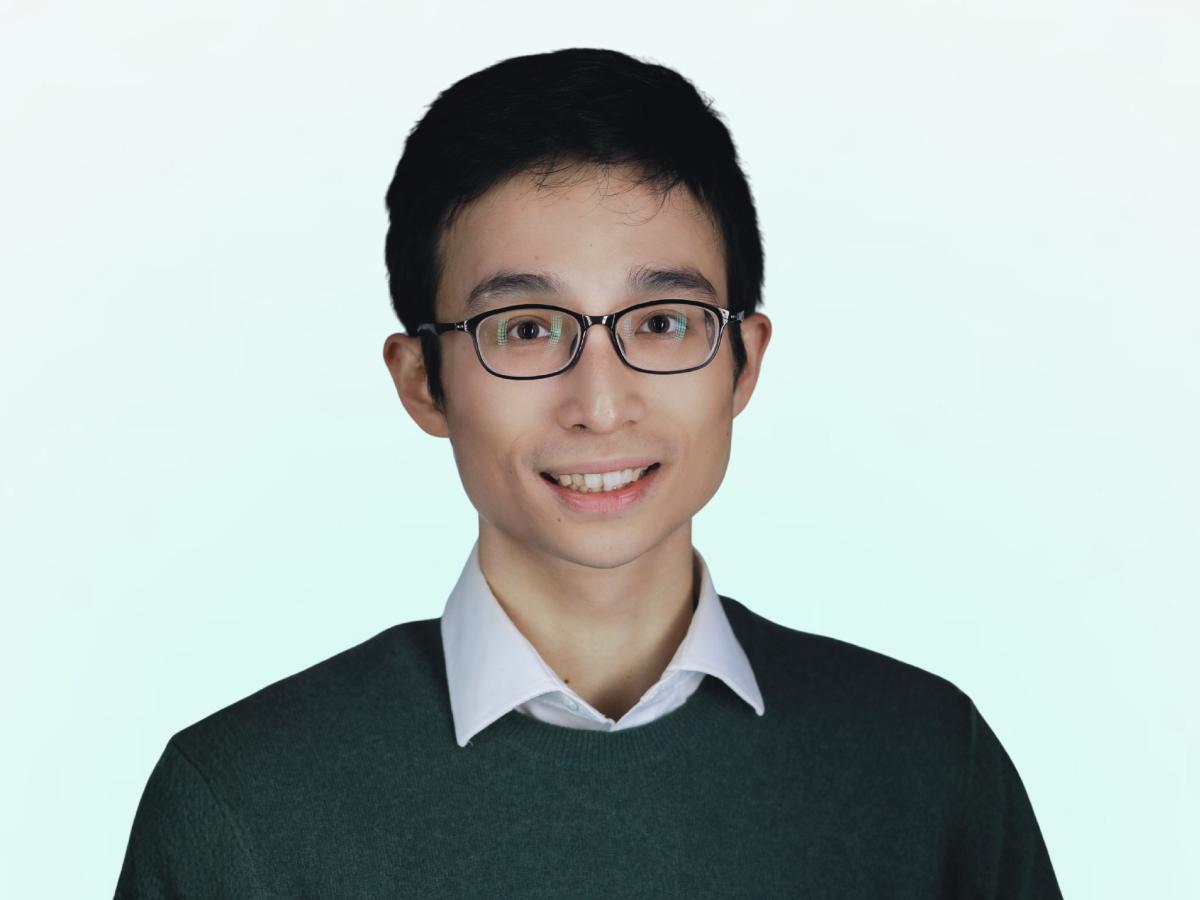
Hao Shen, Ph.D., is a Principal Investigator with a joint appointment in the School of Biomedical Sciences (SBMS) and the School of Biomedical Engineering (SBME) at the University of Hong Kong. Born and raised in Foshan, Guangdong, Hao earned his bachelor’s degree as part of the inaugural graduating class of the School of Life Sciences at Tsinghua University. He completed his Ph.D. in Molecular Engineering at the University of Washington under Nobel laureate Prof. David Baker, becoming the program’s first-ever graduate, and conducted postdoctoral research at the Institute for Protein Design (IPD) before joining HKU.
Hao’s research focuses on the de novo design of functional protein nanomaterials and synthetic biological machinery. During his doctoral studies, he pioneered the computational design of self-assembling helical protein filaments, establishing a new paradigm for controlling protein assembly across custom geometries (Science). At the IPD, he advanced these systems into dynamic, smart materials, including pH-responsive architectures (Nature Nanotechnology), allosterically regulated filaments (bioRxiv), and multi-component assemblies (bioRxiv), achieving levels of assembly dynamics and regulation that begin to rival natural cytoskeletal filaments. His research has since expanded to functional protein nanomaterials such as conductive protein nanowires, far-red fluorescent protein filaments, and chlorophyll-binding filaments for long-range energy transfer, with applications spanning bioelectronics, light harvesting, and smart materials.
Beyond the Lab
Scientific innovation thrives in a collaborative environment that balances rigorous research with time to recharge. As an undergraduate at Tsinghua, Hao was active in campus music, co-founding an a cappella group as a lead vocalist, and he continued singing with the University of Washington Glee Club through both graduate school and his postdoctoral years. Outside the lab, he also enjoys skiing, cycling, and exploring local hiking trails.
To Prospective Students & Postdocs
Our group is actively recruiting highly motivated Ph.D. candidates and postdocs with backgrounds in life sciences, bioengineering, chemical biology, or computer science, with skills spanning machine learning-based protein design, protein biochemistry, structural biology, biophysics, electron/fluorescence microscopy, spectrometry, and device engineering (building microelectrode platforms, measuring conductance). We particularly welcome candidates who combine strengths across more than one of these areas. Feel free to reach out by email with your CV and a brief statement of interest!
Postdoctoral Scientist, Institute for Protein Design & HHMI, University of Washington, Seattle, WA, USA (2019 – 2026)
Ph.D. in Molecular Engineering, University of Washington, Seattle, WA, USA (2014 – 2019)
B.S. in Biological Science, Tsinghua University, Beijing, China (2010 – 2014)
Living systems build filaments and wires from proteins with a level of control that synthetic materials still can’t match: assembling, disassembling, and transmitting charge and information with atomic precision. My lab uses de novo computational protein design to build these structures from scratch, both to understand the natural design rules and to create entirely new functional materials.
We work in three connected directions. First, inspired by bacteria like Geobacter, which conduct electrons over long distances through natural protein nanowires, we design synthetic nanowires with programmable geometry and use electrical measurements (conductance mapping, AFM) to uncover what governs long-range electron transfer in proteins and engineer the first generation of genetically encodable biological conductors. Second, we build switchable protein filaments whose conductance changes when they bind a target molecule, turning them into label-free, real-time biosensors that report on molecular recognition events as they happen. Third, we’re extending this work into living systems, engineering cells to secrete conductive protein nanowires that form biocompatible interfaces with neural and cardiac tissue, a step toward "living electronics" for sensing and stimulating excitable cells.
Together, these projects sit at the intersection of computational protein design, biophysics, and bioelectronics, with applications spanning biosensing, brain-machine interfaces, and regenerative bioelectronics.
PhD student, Postdoc
(*equal contribution; #corresponding author)
First-Author Publications
Co-Authored Publications
Last Update : 2026-10-05
