BSc (Nankai U), PhD (U of Oxford)
Assistant Professor


L1-56, 1/F, Laboratory Block
21 Sassoon Road
Pokfulam, Hong Kong
sbms@hku.hk
T +852 3917 9259
F +852 2817 0857


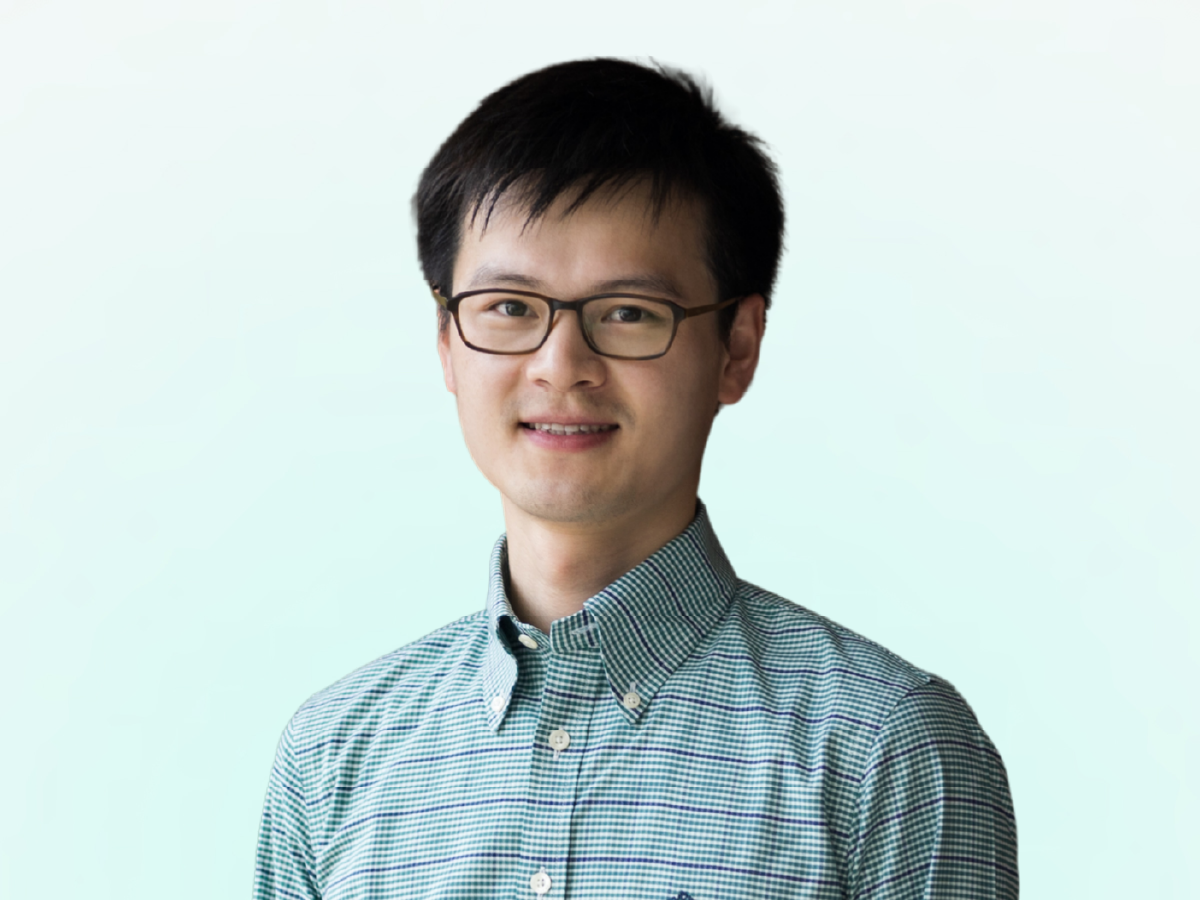
Dr. Tao Ni is an Assistant Professor in the School of Biomedical Sciences at the University of Hong Kong from 2022. Prior to joining to HKU, he was a postdoctoral research fellow at the University of Oxford and visitor scientist at eBIC working on HIV-host interaction and macromolecule assembly using cryoEM and cryoET subtomogram averaging. He completed his Bachelor in Biological Sciences degree in Nankai University (2008–2012) and PhD in structural biology in the University of Oxford (2012–2016).
My lab specializes the state-of-the-art structural biology methods and address key biological questions. We primarily focus on the interface between host and pathogens (virus and parasites) to decipher their relationship in the molecular level, utilizing cutting-edge structural biology approaches. Our current objective is to understand the fundamental principles of positive-stranded RNA virus replication in host cells, including coronavirus (such as SARS-CoV, MERS-CoV and SARS-CoV-2) and Flavivirus (Dengue virus, Hepatitis C virus and ZIKA), all of which are important pathological viruses threatening human’s life and health.
Project 1: Understanding the Mechanism of Replication Organelle Formation and Viral RNA Translocation in Coronaviruses and Flaviviruses. Coronaviruses orchestrate a dramatic remodeling of host cell membranes into double-membrane vesicles (DMVs), which serve as factories for viral genome replication. This critical membrane transformation and DMV formation are driven by a conserved set of viral non-structural proteins (nsps). These nsps assemble a crucial pore complex within the DMV membrane, precisely mediating the highly regulated transport of newly synthesized viral RNA (both genomic and messenger) from the replication lumen to the host cytoplasm. Our research will precisely delineate the intricate mechanisms governing both DMV biogenesis and this essential viral RNA translocation process in coronaviruses. The recent work on mini-DMV pore complex provide a snapshot of DMV biogenesis and pore formation mechanism (Nature 2024).

To uncover conserved and divergent strategies among positive-sense RNA viruses, we are expanding this investigation to Flaviviruses, using Dengue and Zika viruses as representative models. This will systematically investigate their distinct replication organelle formation and the associated viral RNA synthesis and translocation activities. By integrating cutting-edge cellular cryo-electron tomography with rigorous in vitro biochemical assays and molecular virology, we will resolve the structure-function relationships of these viral replication organelles at near-atomic resolution, providing an atomic blueprint of these vital viral hubs.
Project 2: Delineating the Evolutionary Pathway of Nidovirus Replication Organelle Formation. The viral order Nidovirales encompasses a rapidly expanding and highly divergent group of pathogens, including coronaviruses and arteriviruses. Driven by extensive genetic variation and a remarkable ability to adapt to diverse hosts, these viruses represent a profound, continuous threat of zoonotic spillover to global health and agriculture. Despite their evolutionary divergence, a universal hallmark of nidovirus replication is the hijacking of host cell membranes to form Double-Membrane Vesicles (DMVs). These structures, equipped with intricate transmembrane pore complexes, create a shielded microenvironment for viral RNA synthesis and immune evasion.
Building upon our lab’s recent work in resolving the SARS-CoV-2 DMV pore structure using cutting-edge cryo-electron tomography (cryo-ET), this project aims to delineate the evolutionary pathways of these replication organelles. By systematically resolving and comparing the near-atomic structural features of DMV pores across diverse viral families, we will uncover how these vital complexes assemble, function, and adapt across species.
Project 3: Advancing Computational Cryo-EM/ET Methodologies for Quantitative Multi-scale Data Analysis. Methodologically, we are incorporating a cellular tomography pipeline for direct visualization of virus-replication intermediates in their native environment, which can be widely applied to various biological systems and soft matters. Specifically, we will:
1) Develop a cryo-correlative light and electron microscopy (cryo-CLEM), cryo-FIB and cryo-ET pipeline to study the life cycle of virus and host-virus interactions in situ;
2) Incorporate Artificial Intelligence to aid high-throughput automated data collection and data analysis (such as biomolecules target recognition and heterogeneity analysis);
3) Develop subtomogram averaging methods to enable the large-scale and high-throughput macromolecule structure determination in subnanometer resolution.
We are actively seeking highly innovative and dedicated PhD students and Postdocs in the following areas: biochemistry, structural biology, super-resolution fluorescent microscopy, cryo-electron microscopy and tomography, molecular virology, or other areas of expertise. The strong interest and capacity in virology and/or structural biology is appreciated.
For PhD enquiries, please send most up-to-date CV together with a 2-page research proposal directly to Professor Tao Ni (taoni@hku.hk).
For Postdoc enquiries, please send CV together with a 2-page research statement directly to Professor Tao Ni (taoni@hku.hk).
HKU MILES fellow: https://www.hkumiles.com/researchers/taoni
PhD/Mphil students
Postdocs and Research Assistants
Last Update : 2026-07-14
